"I can help you!"

I NO LONGER WORK AS A BOOK MARKETING COACH; I'M THE PUBLISHER AT IMAJIN BOOKS.

I've worked for over 25 years in advertising, promotions and sales, and spent nearly 2 years as a motivational speaker for a major international company. Currently a bestselling novelist and 'shameless' promoter, I've shared my experiences and techniques as a Book Marketing Coach for nearly a decade.

Whether you're published or unpublished, I can help. My last publisher called me a "marketing guru" and "whiz", although I prefer to think of what I do as teaching, or coaching.

"Dare to Dream...and Dream BIG!"

Friday, April 29, 2011

Recipe for a Bestselling Novel


Wouldn't it be great if there was a recipe for making a bestselling novel and if all a writer had to do was gather the ingredients and mix them in, and voila!―a bestselling novel is created? The reality is there are combinations of ingredients that can either get your name on a bestseller's list or fall flatter than an airless cheese soufflĂ©. However, there are some common ingredients that have helped authors achieve bestseller status.

Common Ingredients for a Bestseller:

·       1 cup of well written novel
·       1 cup of professional editing
·       1 cup of professional layout and interior design
·       2 cups of professional book cover, including gripping back cover text
·       1 cup of decent distribution via major online retailers
·       2 cups of book launch, tours and other events, plus advertising
·       3 cups of contests and giveaways by author, publisher or both
·       Countless hours of organization and time
·       Dash of excitement

Method:

Take the well written novel and beat in professional editing until light and readable. Add professional layout and interior design, then stir in professional cover art and back cover text until well combined. Sprinkle in decent distribution until coated and roll mixture out with book launch, tours and events. Top with contests and giveaways, and fold in countless hours of organization and time before adding the finishing touch―a huge dash of excitement. Share with everyone and enjoy!

Reality Check:

While the recipe above may seem kind of silly, these ingredients can lead to a bestselling novel. I know because I've used them all successfully. My novels have made bestsellers lists multiple times on Amazon.com and Amazon.ca. Some made multiple lists on each in a single day. 

I've also sold over 5000 copies of Whale Song, which in Canada makes it a national bestseller.

So how did I do it? I created an exciting day-long event―a "Bestseller Day"―that had enough goodies to draw people in. It was held on my 44th birthday and I gave away 44 prizes.

There are three main ways to get prizes to offer:
1.) Pay for them (I don't recommend this.)
 2.) Get others to donate them.
3.) Find someone to sponsor the event or the prizes. They pay for something you want to give away and get something in return, whether it's free advertising, a mention in your next book, or some other benefit.

The Benefits:

The first benefit of reaching this "status" is obvious. You can use "bestselling author" when describing yourself. 

The next obvious benefit is that you're selling more books, which means you're earning more. 

Another benefit you may not have thought about is exposure. When people look for a book on Amazon, they'll often search using keywords. If your thriller is in the top 10-20 of books listed under "techno-thriller", for instance, you have a much better chance of being noticed. While on those bestsellers lists, more people will come across your name and your book. The more times people see you and your book online, the better the chance is that they'll buy your book.

Becoming a bestselling author takes persistence, creativity and good organization. Follow this recipe for success and you'll rise like a soufflĂ©. Just don't forget that last ingredient―excitement!

Cheryl Kaye Tardif is a bestselling Canadian author whose critically acclaimed, award-winning novels have inspired much film interest. She's appeared on television and radio, and in newspapers and magazines. Cheryl has also presented at writers' conferences in Canada and the US, mainly on topics of marketing and promotion. She's helped many authors achieve success and does so as a book marketing coach, with Bestseller Days, Virtual Book/Blog Tours and Sponsorships her top 3 most requested topics.


Tuesday, February 22, 2011

Ebook publishers and royalty percentages

Ebook publishers really vary on their terms and royalty percentages, though in general, smaller ebook publishers seem to be more flexible and many offer higher royalties.

Here are a couple of examples:

eHarlequin - (x) On copies of English language electronic editions of Publisher or its Related Licensees sold in North America:
. on the first 100,000 copies of each such edition, six percent (6%) of the Cover Price;
. on the next 100,000 copies of each such edition, seven percent (7%) of the Cover Price;
. on the next 100,000 copies of each such edition, eight percent (8%) of the Cover Price;
. on the next 100,000 copies of each such edition, nine percent (9%) of the Cover Price;
. on all such copies of each such edition thereafter, ten percent (10%) of the Cover Price;
(x) On copies of English language electronic editions of Publisher or its Related Licensees: four percent (4%) of the Cover Price in any country outside of North America.
(x) On copies sold of non-English language electronic editions of Publisher or its Related Licensees: two percent (2%) of Cover Price in any country.

Double-Dragon eBooks - 30 % of the cover price less credit card processing fees for eBooks sold from our site, 30 % of the amount received from a reseller, and 8 % of the retail price for POD print books.

Ellora's Cave - Royalties: 37.5% for digital releases; 7.5 % for print books.
Length of grant of publishing rights: Life of copyright
Includes digital, print, audio, translation, and secondary/subsidiary rights.

Wild Child Publishing - 40% of sales

Wolfsinger Publications - 75% of sales less charges for any handling costs, service fees, or discounts when paid in full by the distributor, bookstore, vendor, organization.

Imajin Books - 50% of sales collected, no charges; term - 5 years.

These are just a few examples of how widely varied author royalties are, and one thing I do advise is to check the other terms very carefully.

Sunday, February 20, 2011

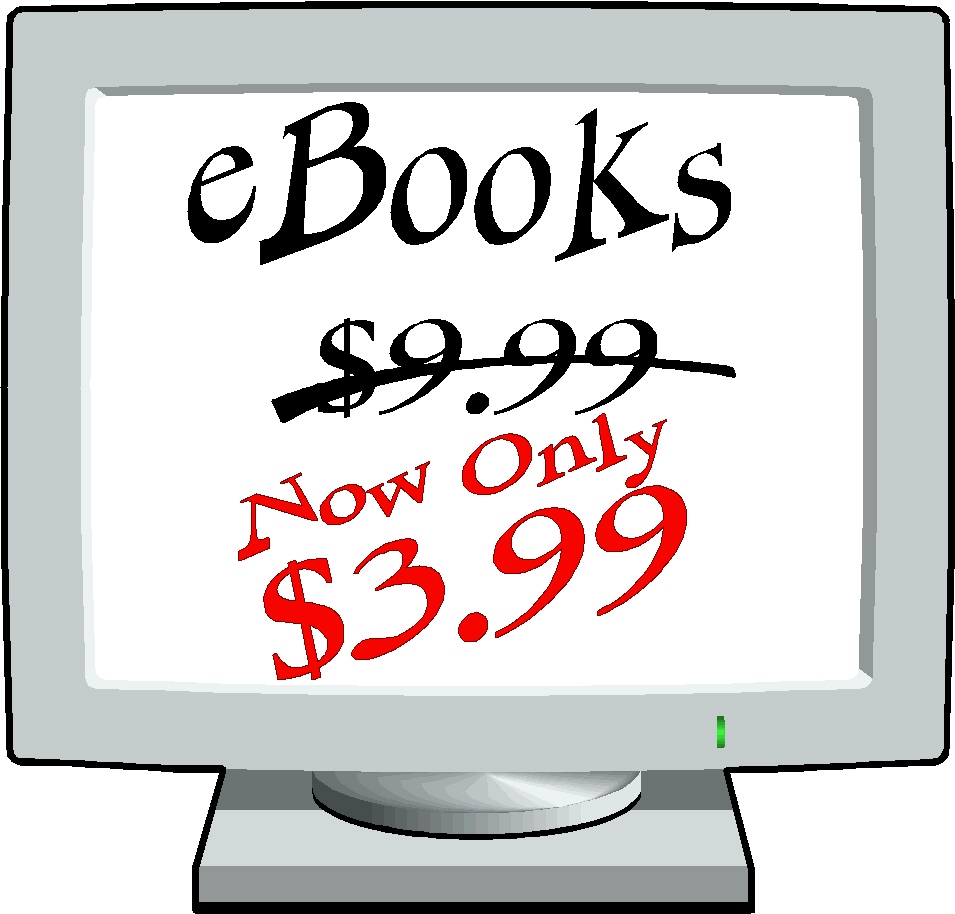
How important is ebook pricing?

In today's economy, the answer to the above question is easy to answer: ebook pricing is vital to the sales and success of your book. Price them too high and people may skip your book and go for something less expensive, especially if you are not a "big name author". Price your books too low (with the exception of a special sale) and readers may think you're a hobbyist and not very good.

There has been a lot of discussion of what the perfect price point is for an ebook. The answer? You may have to play with the prices if you've published your own ebooks to determine where the best price lies.

A strong proponent of $0.99 and $1.99 ebooks, author JA Konrath, held those views up until last year, when Amazon raised the royalty level to 70% for ebooks priced between $2.99 and $9.99. Konrath took the plunge and raised his prices and has reported that this hasn't hurt his sales in the least. In fact, he reports he made over $100K last year on his ebooks, across multiple retailers. Not bad income for an author who is self-publishing his own books now, after being published by the big guys for years.

This past week, I've been asked by three authors to advise them as to why their ebooks aren't selling. The first thing I did was head over to their Amazon page, where I discovered ebook prices all over $9. And these are authors with only a couple of books. One only had a single title. You can bet they probably aren't widely known--compared to names like Konrath, Hocking, etc.

Along with high ebook prices, I noted that one author had overly busy book covers. I believe that will hamper his sales. Another author had a poorly worded description. The major problem is that all three authors are published by midstream traditional publishers and this means they don't have much--if any-- say in the pricing, covers or description.

My advice to all three: try to get your ebook rights back and publish these ebooks on your own. Or at least find an ebook publisher (like Imajin Books) that will work with you, price your ebook lower, update your covers and description if needed and give you a higher percentage of royalties. Because without getting that price lowered, you won't have much of a chance selling more ebooks.

In Konrath's latest blog post, he talks about an author who reached the NYT bestsellers list multiple times, who was just offered a $200K two-book deal. After Konrath crunched the numbers and pointed out that her ebooks would be priced higher, it appears this author would be better off publishing these on her own--especially since she obviously already has a platform and a built-in fan base from her existing titles--and setting lower prices.

Kindle Nation Daily conducted a recent survey. Here are some of the results.
"Kindle owners are buying ebooks with ever-increasing frequency, with 13% buying 60 or more paid ebooks a year, 22% buying 30 to 60, and 33% buying 15 to 30."
"A general Kindle reader "buys 4.9 print books and 46.6 ebooks a year. Slightly over half of her ebook acquisitions are free or priced at less 99 cents."
From the survey, here are the top 4 defining factors in purchasing an ebook:
1. ebook is by a favorite author
2. ebook is significantly cheaper than hardcover or paperback edition
3. ebook is priced at $3.99 or LESS
4. ebook comes highly recommended by someone you trust

For great deals on Kindle ebooks, check out Kindle Nation Daily and subscribe to their blog on your Kindle, so you'll receive alerts on exciting new releases, sales and more.

In the end, the pricing issue really boils down to one thing. Publishers and authors should give readers what they want, and they want less expensive ebooks.

Sunday, December 19, 2010

The Top 10 Reasons Why Authors Should Network with & Market to Libraries

When one of my coaching clients asked me what I thought were the top 10 reasons why authors should network with libraries, I created this quick list.

1. Libraries BUY books.
2. People still use libraries and will continue to do so.
3. Libraries are getting into ebooks.
4. Libraries love author visits.
5. Libraries often have other events you can attend.
6. You can arrange to sell your books to patrons during events in a library.
7. Libraries know other authors to which you can connect.
8. Libraries give your books more exposure.
9. Public Lending Right Commission will pay Canadian authors every year based on how many of their works are in public libraries, while Access Copyright pays authors for the use of their work in educational systems (& elsewhere).
10. You’ll be able to tell readers your books are in the library.

Authors and libraries go hand in hand. Both have a love for the written word, for books and ebooks. Both can work together compatibly to give readers what they want--access to books and ebooks. It's a win-win for everyone concerned.